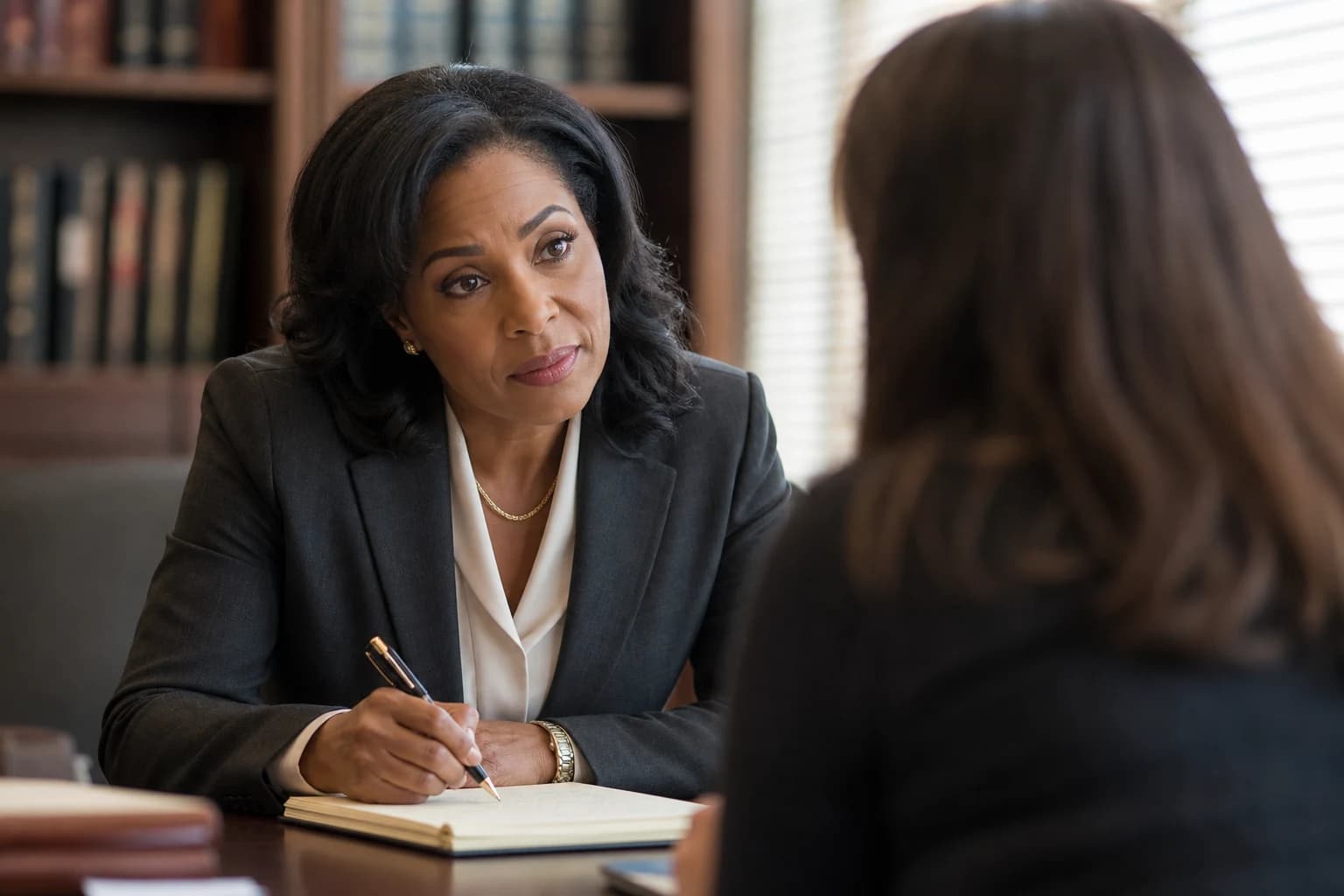
A free case review is an early conversation, at no charge, where you tell what happened and an attorney gives an honest read on your options. It is not a promise of a case or a result, and it does not make you a client — that begins only when an attorney agrees in writing to represent you.
You tell your story, and the attorney listens and asks focused questions. Together you get a clearer sense of whether the facts point to a claim, what the timeline looks like, and what the next steps could be — with no obligation to keep going.
A good review quietly does several things at once. It organizes the sequence of events into something an attorney can weigh. It flags the legal issues your facts raise — discrimination, retaliation, unpaid wages, a public-policy firing — and whether an agency step might come first. It surfaces the deadline question, because a filing clock is running whether or not you know its date. And it lets you feel out fit: whether this is someone who listens, explains plainly, and levels with you about the weak spots as well as the strong ones. What it is not is a promise of any outcome. No careful attorney predicts a result from a first conversation, and anyone who does is telling you something the rules of professional conduct do not permit.
Bring the record and the timeline, not conclusions. The more concrete detail you can point to, the sharper the attorney’s read — but you do not need everything perfectly lined up to have a useful conversation:
A timeline of key events — dates, what was said, and the reason you were given.
Many California employment attorneys work on a contingency basis, meaning the fee is a percentage of any recovery rather than an hourly bill. The terms vary, so the one habit that protects you is simple: ask for the fee arrangement in writing before you agree to anything.
Contingency is common in employment cases because it lets a worker pursue a claim without paying by the hour. Even so, the details differ from one office to the next — the percentage, how costs are handled, and what happens if the case does not succeed. A trustworthy attorney walks through all of it plainly and puts it in writing. Because so many workers reach out after the office has closed, some California employment practices route their late-night calls to an after-hours intake line that actually answers, so a story told at midnight is heard and scheduled instead of lost to voicemail. However you reach them, insist that the fee terms are explained and written down before anything begins.
For the first conversation, generally yes — many California employment attorneys review a potential case at no charge. What happens after depends on the fee arrangement you agree to. Ask up front whether the review itself carries any cost, so there are no surprises down the line.
Q.Will talking to someone make me a client?
No. Talking with an attorney or with our intake assistant does not create an attorney-client relationship. That relationship starts only when an attorney agrees in writing to represent you. Until then, the conversation is just a way to understand what happened and what your options are.
Q.What if I am not sure I even have a case?
That is exactly what the review is for. You do not need to arrive certain, or with legal labels. You describe what happened, and the attorney helps sort whether the facts point to a claim. Being unsure is the normal starting place, not a reason to stay quiet.
This page is general legal information about California law — not legal advice — and reading it or talking with our intake assistant does not create an attorney-client relationship. Every situation turns on its own facts, and that relationship begins only when an attorney agrees in writing to represent you. Deadlines in employment cases are real, strict, and vary by claim, so confirm any date with a California attorney or the relevant agency before you rely on it.
Immediate answers · 24/7/365
One conversation. No obligation. Any hour.
Tell Ellie what happened the way you'd tell a friend. She can organize the timeline and point to general California workplace information.